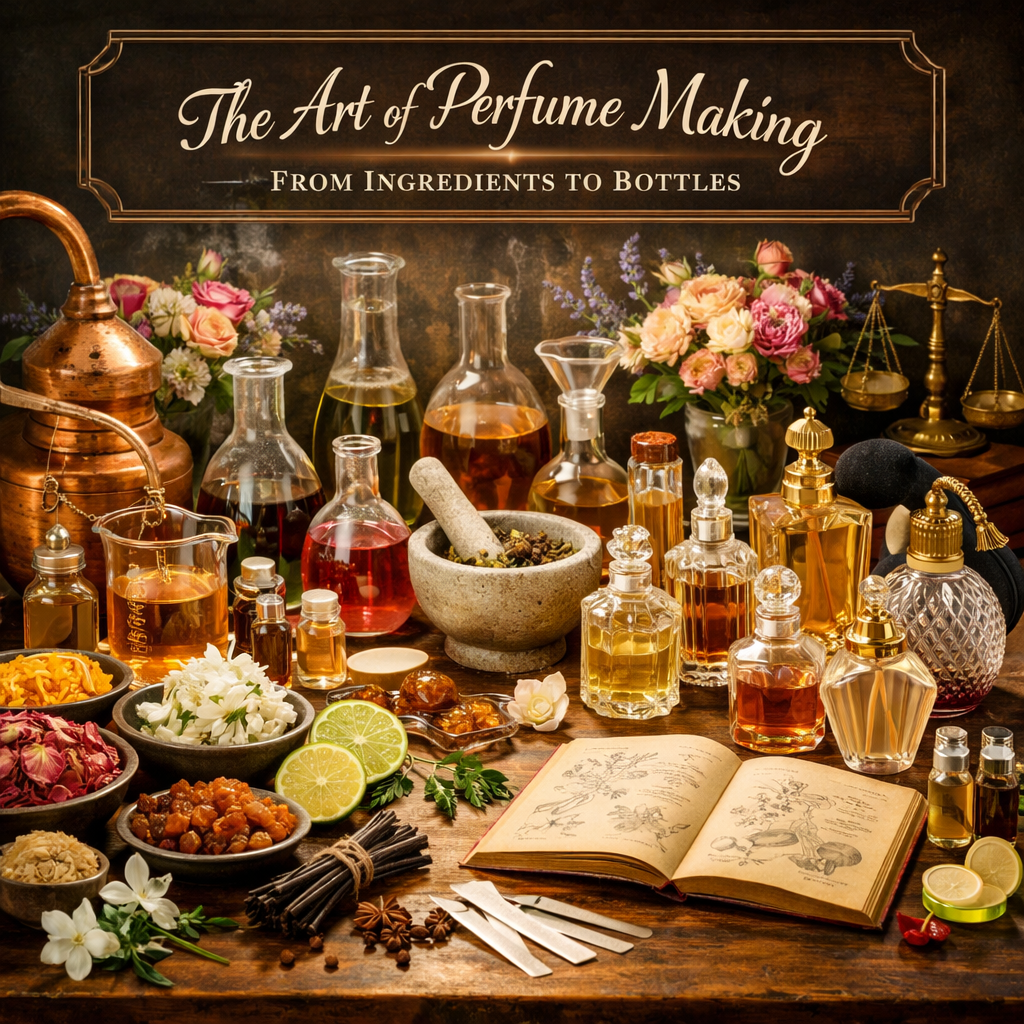
The Art of Perfume Making: From Ingredients to Bottles
Introduction:
Perfume has been around for centuries, captivating people with its enticing scents. But what exactly goes into creating these fragrant masterpieces? In this blog post, we take you on a journey from the first step of perfume creation to the final product that lands on your shelf.
Ingredients That Make Perfume:
-
Top Notes: These are the first scents you experience when applying perfume, usually light and fresh. Common examples include citrus fruits, lavender, and herbs.
-
Heart Notes: The middle layer of perfume, providing the body of the scent. Floral notes like rose, jasmine, and lily are often found here.
-
Base Notes: The lasting fragrance that lingers after the perfume has settled. Woody, amber, and musk are some examples.
-
Fixatives: These help the fragrance last longer on the skin, with natural fixatives like resins and synthetics like musk.
The Distillation Process:
Learn about the complex process of extracting essential oils from flowers, fruits, and spices using techniques like steam distillation and cold pressing.
Blending and Testing:
Master perfumers carefully blend these oils in specific ratios to create a balanced fragrance. The testing phase ensures that the scent evolves beautifully over time.
Packaging and Bottling:
Once perfected, the perfume is packaged in an elegant bottle, often designed to match the fragrance’s personality. From luxurious glass containers to sleek, modern designs, the packaging adds to the experience.
Conclusion:
The art of perfume-making is a meticulous process that combines science and creativity. By understanding how perfumes are made, we can appreciate the craftsmanship and luxury behind every bottle.
NEW POSTS

January 28, 2026
The Ultimate Guide to Perfume Layering: Create Your Signature Scent

January 28, 2026
The Impact of Perfume on Mood and Memory: How Scents Affect Us

January 28, 2026
How to Choose the Right Perfume for Your Personality

January 28, 2026